Expanded Polystyrene (EPS) is one of the most widely used foam materials in packaging, construction, food service, electronics, and sports equipment manufacturing. Thanks to its lightweight structure, thermal insulation properties, and excellent shock absorption performance, EPS has become a preferred material for protecting products during transportation and storage. However, as EPS usage continues to increase worldwide, managing and recycling EPS waste has become an important challenge for many businesses.
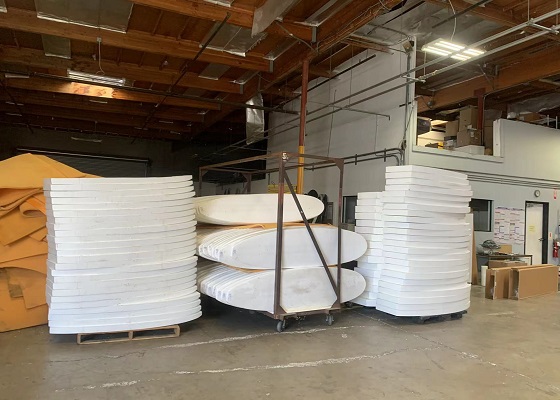
During the production of EPS packaging, insulation boards, protective inserts, and molded foam products, large amounts of EPS scraps, defective products, and foam dust are generated. Because EPS consists of approximately 98% air, even a small amount of material can occupy significant storage space. For manufacturers and recyclers, the bulky nature of EPS often leads to higher storage, transportation, and disposal costs.
An EPS melting machine provides an effective solution for EPS recycling. Using thermal densification technology, the machine melts and compresses waste EPS into high-density ingots that are easier to handle, store, and transport. Unlike some recycling equipment that only processes large foam pieces, an EPS melting machine can also recycle EPS dust and small foam scraps, making it particularly suitable for manufacturing environments where cutting and trimming operations generate fine EPS waste.
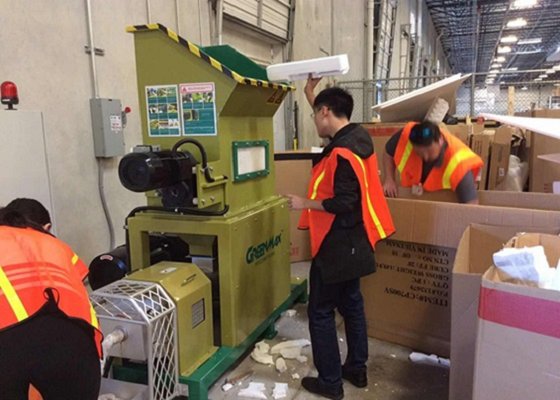
One of the key advantages of an EPS melting machine is its high compression ratio. With volume reduction rates of up to 90:1, the machine can dramatically decrease the space required for waste storage and transportation. Material that previously filled an entire truck can often be reduced to a few pallets of dense EPS ingots, significantly lowering logistics costs and improving recycling efficiency.
GREENMAX EPS melting machines are widely used by EPS packaging manufacturers, appliance and electronics factories, insulation board producers, furniture companies, sports equipment manufacturers, and recycling facilities. Whether handling production scrap or post-industrial EPS waste, the equipment helps businesses streamline recycling operations while improving the value of recyclable materials.
After densification, the recycled EPS ingots can be further processed into recycled polystyrene pellets and used to manufacture new plastic products. This helps companies reduce landfill waste, support circular economy initiatives, and turn EPS waste into a reusable resource. For businesses looking to improve sustainability and reduce operating costs, an EPS melting machine is an efficient and proven recycling solution.
FAQ
1. What is EPS melting machine?
EPS melting machine is a recycling machine that uses heat to melt and densify EPS foam waste into compact, high-density ingots for easier storage and transportation.
2. Can an EPS melting machine recycle EPS dust?
Yes. In addition to EPS blocks and packaging waste, an EPS melting machine can effectively process EPS dust and small foam scraps generated during production.
3. What is the compression ratio of an EPS melting machine?
Most EPS melting machines can achieve a volume reduction ratio of up to 90:1, greatly reducing storage and transportation costs.